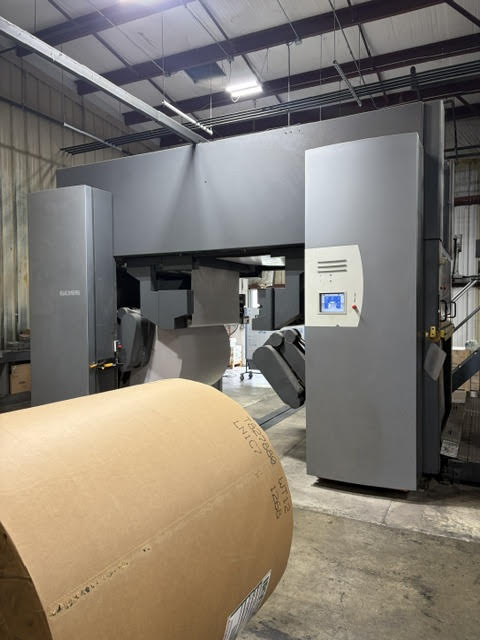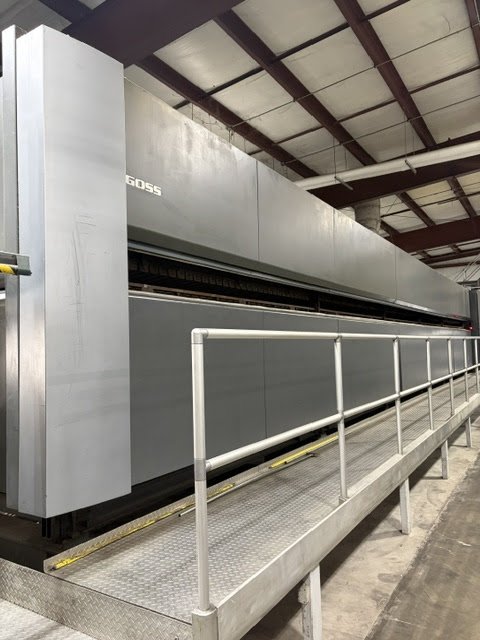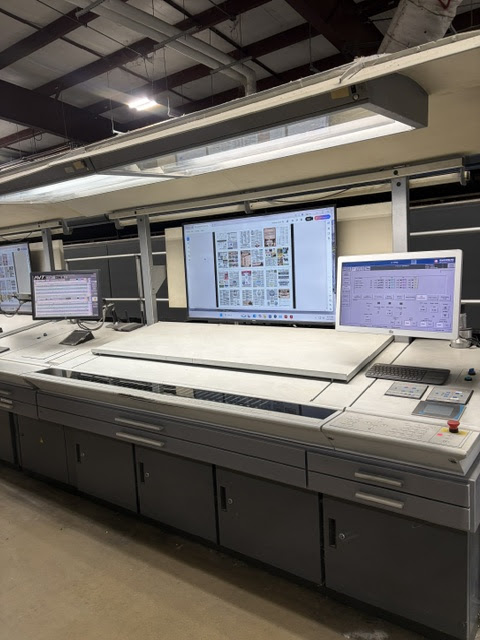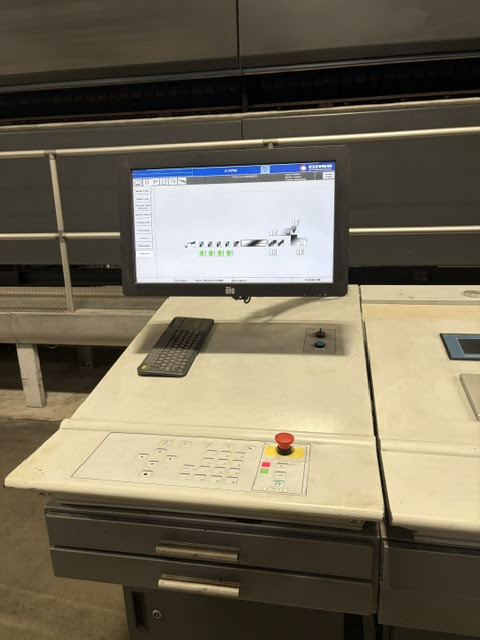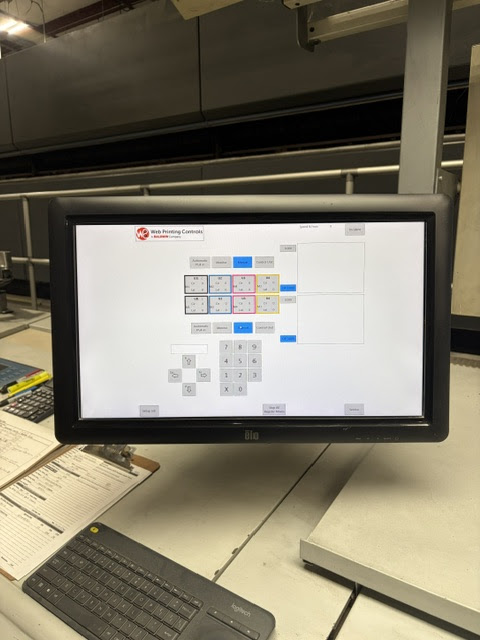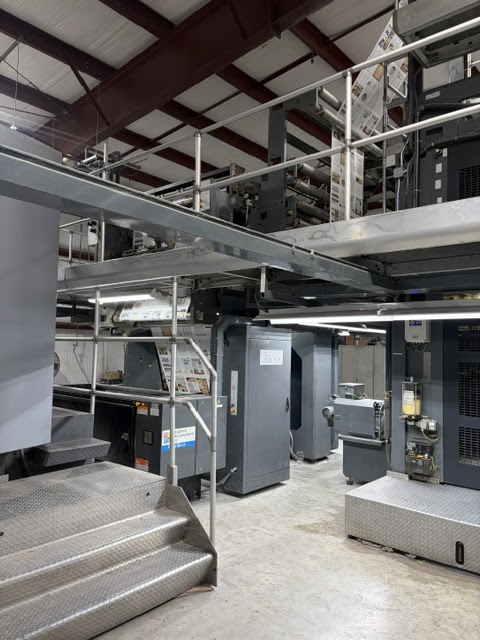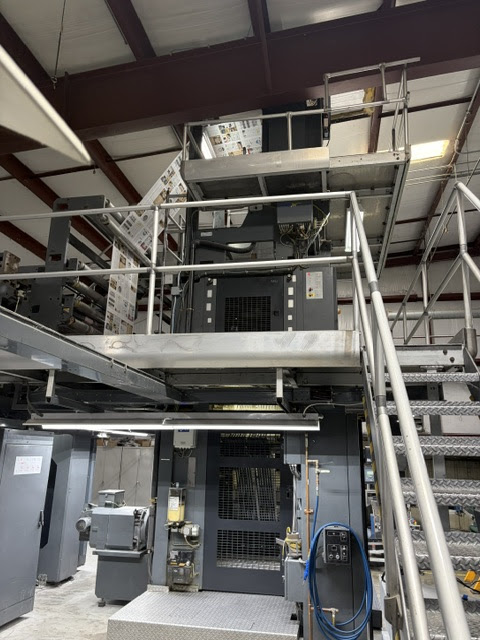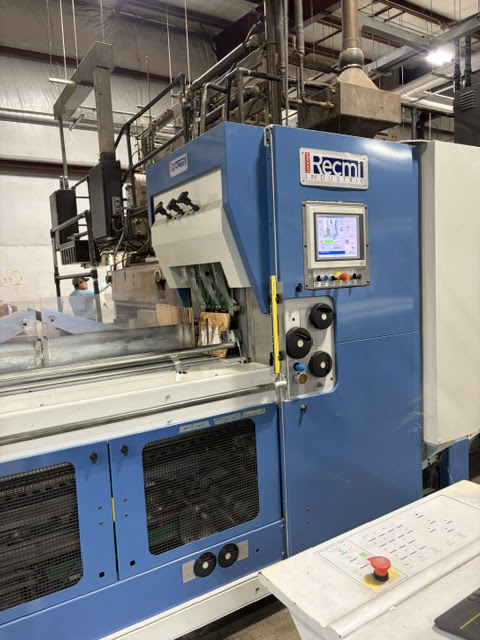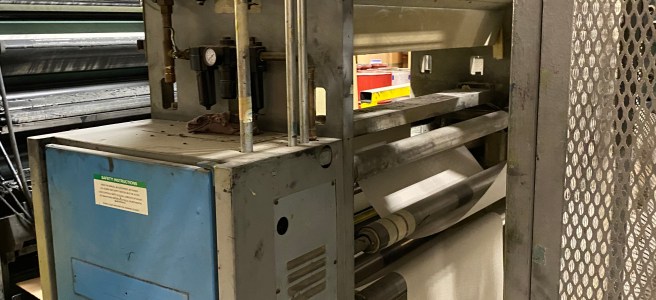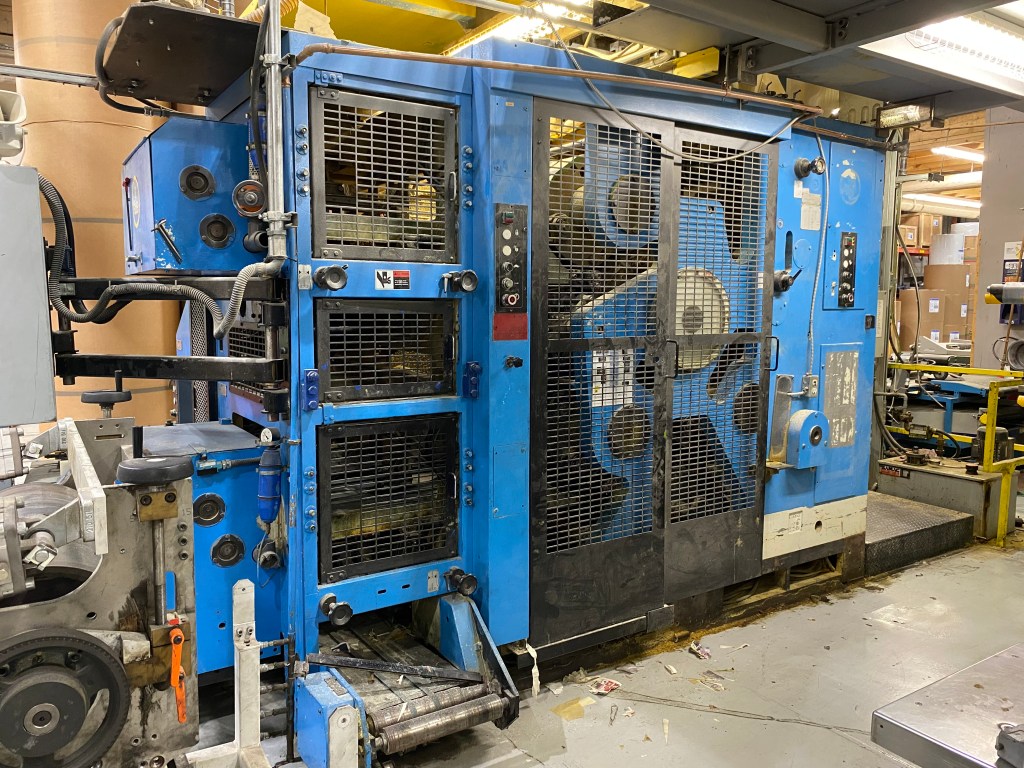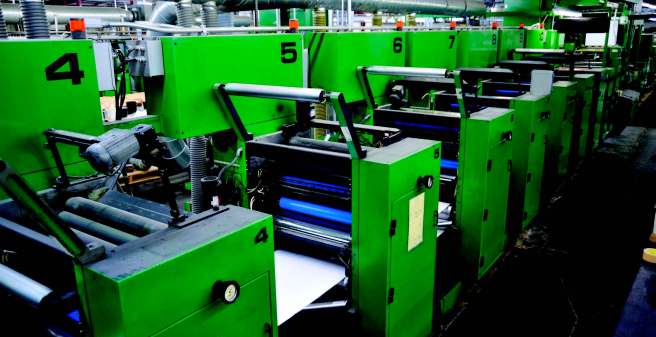
RDP 260 Press

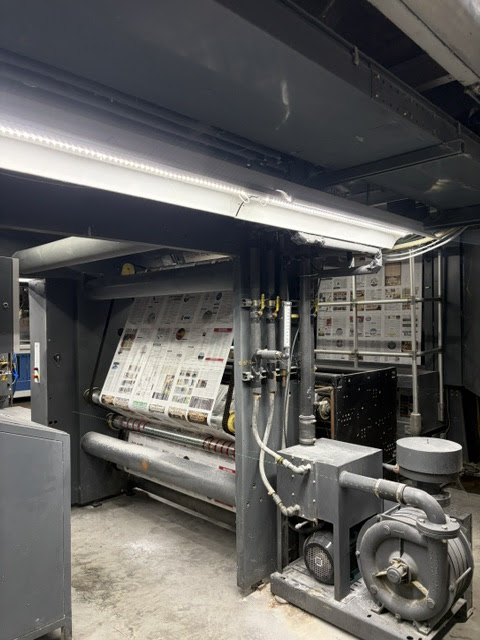
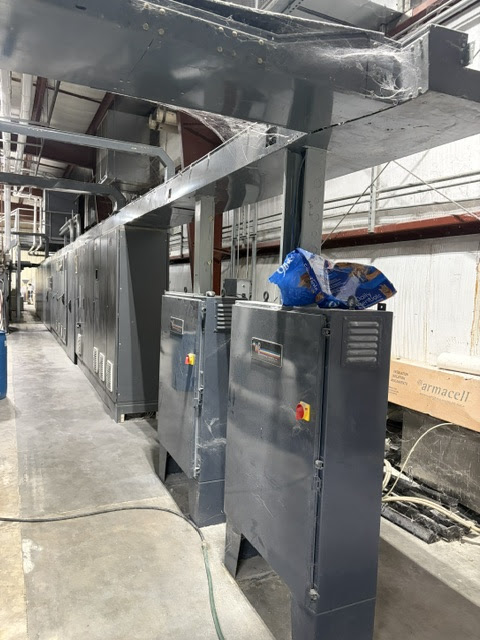
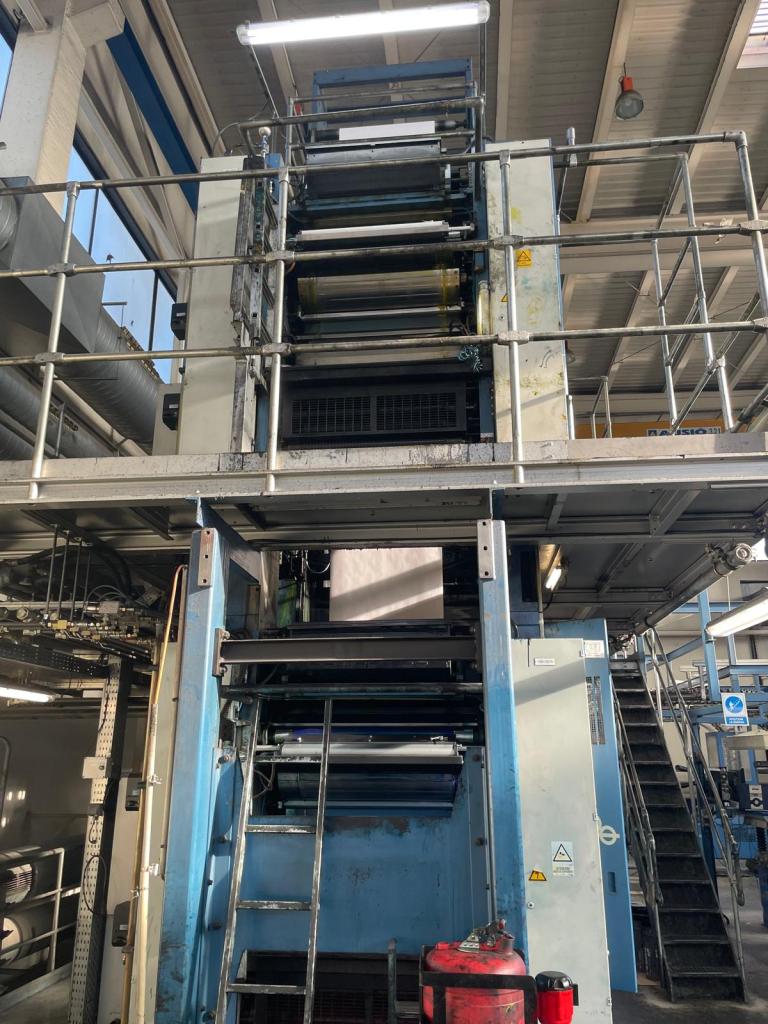
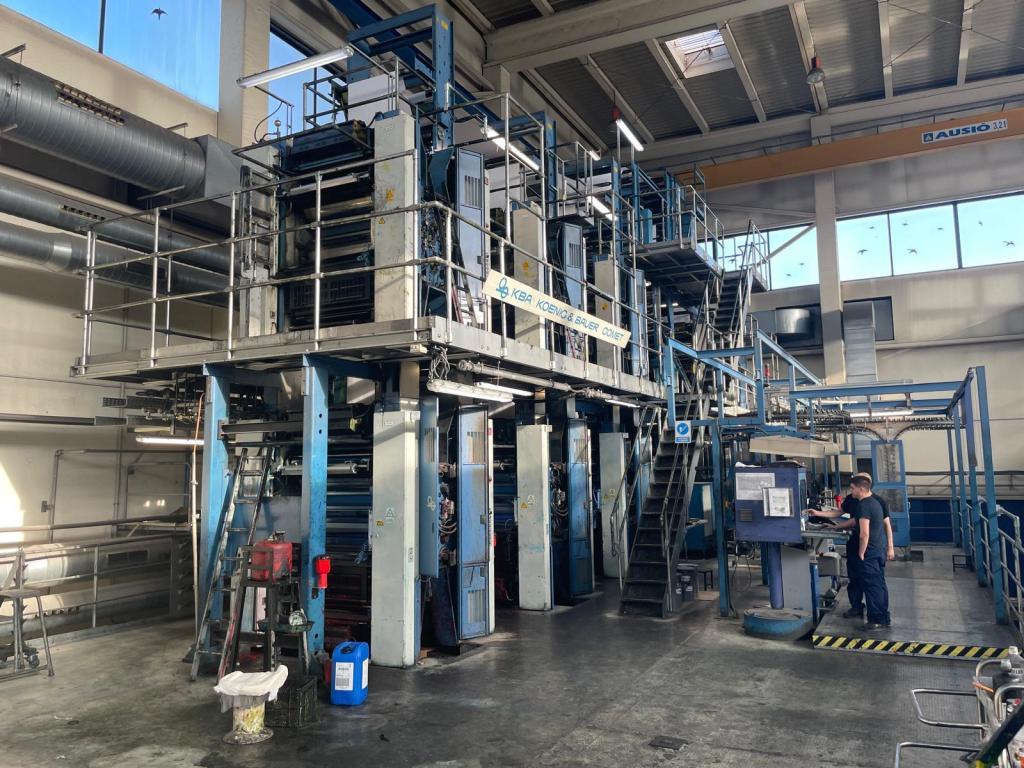
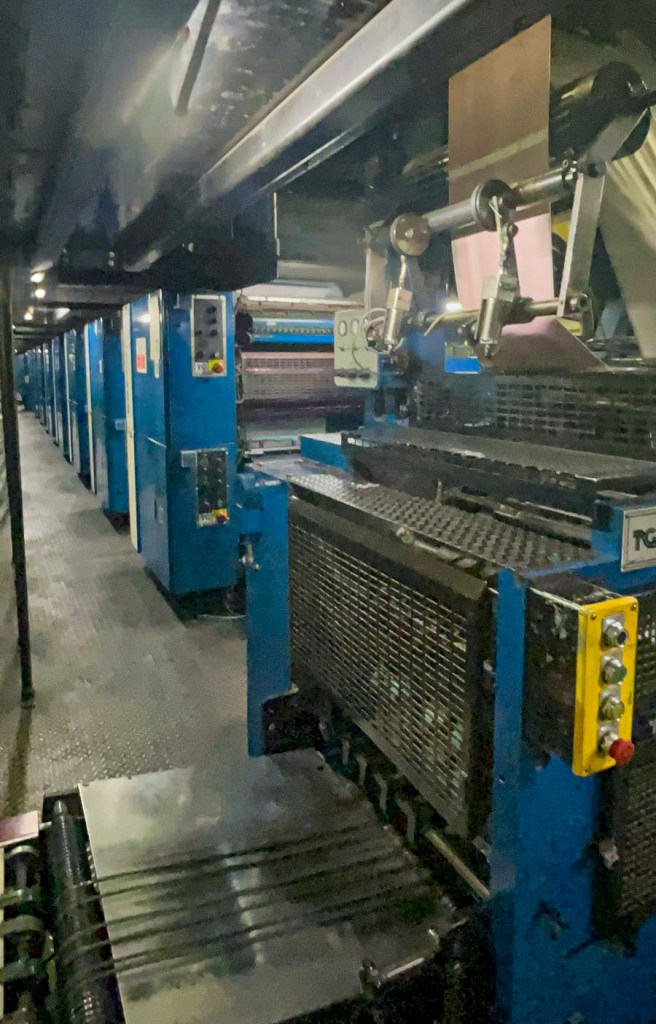
RDP 260 press 10 colors with double numbering.

General Specifications.

The RDP Marathon web press (often referred to by model lines such as the RDP 260, 200V, 260V, 300V, SR series, etc.) is a line of high-performance variable-repeat web offset printing presses originally manufactured by RDP Marathon Inc. (a company with roots in Montreal, later acquired and integrated into broader Barry-Wehmiller/PCMC operations).

These presses are engineered for high-volume commercial printing, business forms, direct mail, labels, packaging, and specialty applications. They emphasize flexibility, reliability, and inline finishing capabilities for efficient production.

Key Features and Specifications (General Across the Line):

  • Variable Repeat/Cutoff: Adjustable cylinder sizes (e.g., 17–28 inches or wider ranges depending on model) for format flexibility without full cylinder changes.
  • Web Width: Varies by model — e.g., ~20.5″ for smaller models like the 200 series, up to 26.5″+ for the 260 series, and larger for 300/380 models.
  • Printing Units: Highly configurable (1–10+ colors), with options for blanket-to-blanket perfecting (two-sided printing) or other configurations.
  • Speed: Up to 1,500–1,800 feet per minute (fpm), depending on the specific model and configuration.
  • Inline Capabilities: Supports coating, UV/EB/hot air drying, numbering, perforating, die-cutting, folding, sheeting, and other finishing in a single pass. Many include advanced controls like Smart•Set systems.

RDP Marathon web presses use offset lithography principles on continuous paper rolls (webs), with heat-set or cold-set options. Their modular, variable-size design makes them versatile for printers handling diverse jobs — from short-to-medium runs with frequent format changes to long, high-speed production. They are known for robust construction, customization (including hybrid digital conversions in later years), and strong performance in demanding environments.

Used RDP Marathon presses remain active in the secondary market, valued by commercial printers for their durability and cost-effectiveness compared to newer equipment.

This is a basic overview. Let me know if you’d like details on a specific model (e.g., the 260), comparisons to other presses in your inventory, technical specs, or anything else!
A powerful, reliable workhorse offset press, the RDP 260 was installed in May

1992. The original configuration consisted of a splicer, four conventional ink

units, numbering units, all processing units and a folder.

In 1996, the four existing print units were rebuilt for UV printing. Six

additional UV print units were added. Also installed at the time was a unit

for applying remoist, scratchoff, and varnish, as well as UV and RF drying

capability.

In 2012, a hot-air drying unit

was added for aqueous coating,

with a two-sided silicone applicator

installed in 2013.

Information specific for this press.

General

• Speed – Mechanical Drive -50fpm to 1500fpm

• Gear Lubrication – Continuous oil bath

• Drive Train – Tubular drive shaft with flexible steel

disk couplings at gear boxes

• Press Drive – Electric DC Drive 150 HP

• Max web width – 26 1/2”

• Max print width – 26”

• Print cylinder circumference – 22”

• Web Break Detectors – Electric eye style mounted

over the web

• ET web guide

• Frames – 2” thick cast iron (34” inside frames)

Unwind

• Martin Model EC Plus-1526 Automatic Splicer

• Max splicing speed – 1500fpm

• Max web width – 26 1/2”

• Max roll weight – 1800 lbs

• Max roll diameter – 52”

• Two pneumatic core shafts (3”, 5” dia)

Web Cleaner

Doyle Web Cleaner

Print Units

• No. Units – 10

• Reel-in Blankets

• Motorized Circ. Register with remote control

• Motorized plate side lay with remote control

• Plate cylinder skewing and form roll adjustment

• Auxiliary Unit drive motors

• 360 deg circumferential gear boxes

• Dahlgren dampening system

• Master Flo SF100 Central Refrigerated circulator

for dampening (10 units)

• Chilled vibrators each unit (Master Flo Chiller)

• Ink Agitators

• EPG motorized ink key controls with operator

console

• Auto ink roll wash-up

Back Printing

• Print units 1-4 are reversible

• Hockey sticks on print units 1-6, 9

• Turn bars between units 4-5, 5-6

UV Dryers

• Prime UV curing system

• Prime Smart system control

• Three units for positioning after unit 1, 4, 5 or 1

Other In-Line Features

• Double numbering unit (constructed for arabic

numbering, barcoding or marginals)

• IDC combination remoist / scratchoff / varnish unit

• Prime UV and Proctor Strayfield model SW 25/76 RF

dryer for above unit

• Double filehole unit

• DK Hart die cutter with rewind

• Processing unit inc. linehole punching, vertical perfs

(3 shafts) and two cross perf cylinders

ADDITIONS

In-Line Coating Equipment Additions

• Megtec Silicone Applicator (Added June 2012)

• ASI Hot Air Drying System for Aqueous Coating

(Added June 2012)

• Modified Silicone Applicator to 2 Sided

Register Control

• Electromat auto register and cut-off control

• Electromat inspection system for two-sided viewing

Folder

• Fordyce VS 1326 single stream

• Max web width – 26 1/2”

Sheeter

• Egan (John Brown) Model VB1026LC Sheeter /

Batcher Stacker

• Date 3/31/92

• Retrofit for 44” pile (Added November 2012)

• Sheeter Optional

Rewinder

• WTI Turret Rewinder (Mod. No. 50/26.5/1200)

Rewinder is optional

This is a very highly optioned press with many features added so that it can produce a wide variety of work. If it fits your needs this is a good machine to look at and add to your plant.

For more information please contact either Bob Dowling 708-721-0792 you can call or text on this number or Bob is available on Whats App – or you can also contact Bob Nuttmann at 610-227-9840 call or text and I am available on Whats App too
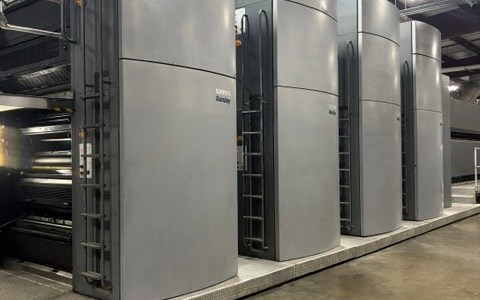
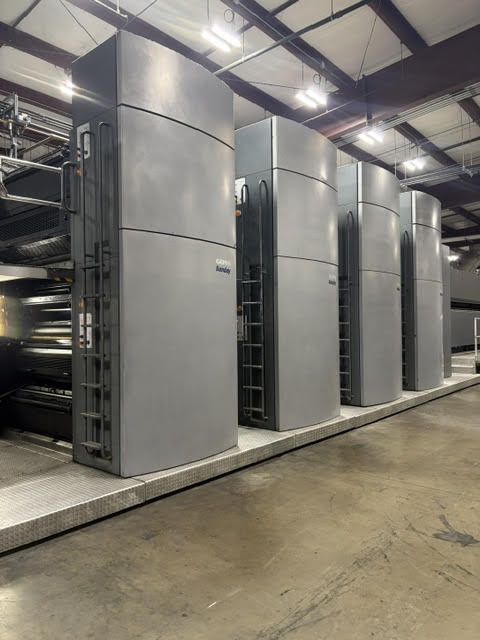
Goss Sunday 4000 4 Unit Heatset Web Press For Sale

The Basic Specification For This Machine Are As Follows

  • Goss Sunday 4000 4 Unit Heat Set
    2002
    57 inch width
    22.75 cutoff – This is a two around press
    GMI Closed Loop Color
    PCC2 Combination Folder
    Conti Web Splicer

The Goss Sunday 4000 is a high-quality, gapless double-circumference (two-around) heatset web offset press designed for commercial and publication printing, emphasizing high pagination, speed, automation, and print quality.

Web Width: 57″ (approximately 1450 mm) — one of the wider options available for the Sunday 4000 series.

Cutoff: 22.75″ (578 mm) — a common commercial cutoff size that supports efficient 48-page (or similar high-pagination) formats in a 4-unit (or more) tower setup on a single web.

Cylinder Design: Gapless blanket technology (double circumference/two-around), which reduces print defects, improves registration, and allows for more printable area per revolution compared to traditional presses.

GMI Closed Loop Color System: This is an advanced automatic color control system (often from Graphic Microsystems Inc., or similar Quad Tech variants in listings) that uses real-time scanning and feedback to maintain consistent ink density and color accuracy across the run. It minimizes manual adjustments, reduces waste, and ensures high-quality, repeatable results.

PCC2 Combination Folder: A pinless combination folder (PCC-2) capable of producing a variety of signatures, including tabloid, quarter-fold, digest, and other formats. It supports high-speed delivery with options for multiple ribbons/out configurations (e.g., 1 web in, 3 ribbons out with slitters and angle bars).

Conti Web Splicer: A reliable zero-speed or flying splicer (Goss Contiweb model) with integrated infeed and web guide. It allows for automatic roll changes without stopping the press, minimizing downtime and waste on long runs.

The Sunday 4000 series is known for mechanical speeds up to around 70,000–75,000 copies per hour (cph/iph), depending on configuration, with extensive automation for make-ready, plate changing, and operation. It’s well-suited for high-volume commercial work like magazines, catalogs, inserts, and other multi-page products. The gapless design and automation make it efficient for both long and shorter runs while delivering premium print quality.

This specific 57″ wide, 22.75″ cutoff setup with the mentioned auxiliaries would be a capable single-web system for producing high-page-count heatset products efficiently. As a printing industry veteran, you likely already know these presses are durable and have strong aftermarket support through manroland Goss and used equipment channels.

I you like I can send you a copy of the original brochure that was made for this model press.

This press is located in the United States and is in good running condition. The seller would like to replace it with a somewhat smaller width and circumference press due to the length of runs changing in his business backlog. Please call, text, email, or what’s app either Bob Nuttmann 619-227-9840 – call or text, email rfcntwo@gmail.com or Bob Dowling 708-721-0792 – call or text we both can do Whats app.

Bob Nuttmann

Bob Dowling

Tensor T1400 Newspaper /Commercial Web press

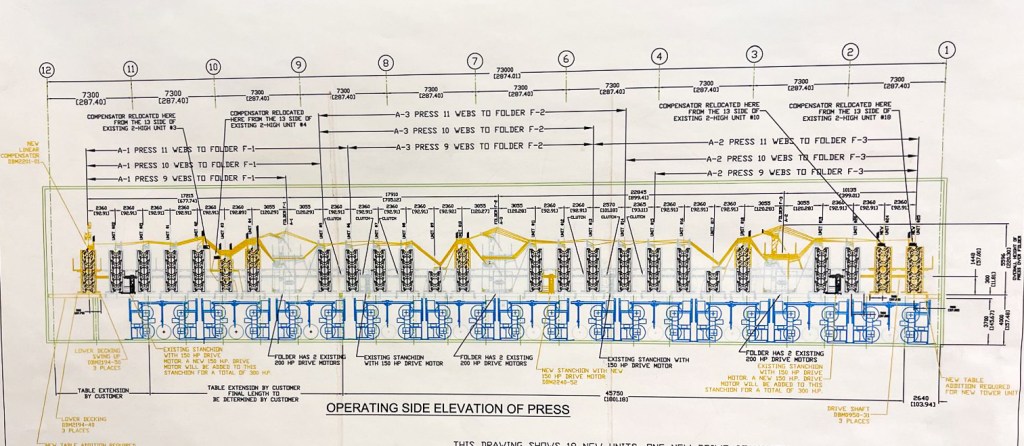
We have for sale a good condition Tensor T1400 press for newspaper or commercial printing. This particular press is 560mm cutoff. The specs are spelled out in a detailed layout drawing. I see 22 4 highs, 2 monos, 3 folders and 42 roll stands. The client indicated they are currently using it a a wide variety of work.

The above layout drawing is the layout of the press. For more information contact us. Bob Dowling 708-721-0792 call or text or whats app or Bob Nuttmann 619-227-9840 call or text or whats app.

The Tensor T1400 is a single-width web offset printing press manufactured by Tensor International (often associated with U.S. Tensor). It is designed primarily for newspaper, coldset, and sometimes heatset commercial printing applications, offering a balance of performance, reliability, and cost-effectiveness.

Key Features and Specifications

  • Type: Web-fed offset printing press (continuous roll-fed paper).
  • Maximum Speed: Up to 35,000 impressions per hour (IPH) or copies per hour, depending on configuration and folder.
  • Cutoff Range: Typically 21″ to 24¾” (533 mm to 630 mm), with common configurations around 21.5″, 22″, 22.75″ (578 mm), or similar sizes.
  • Web Width: Supports 29″ to 40″ (737 mm to 1016 mm), with many installed units in the 35″–36″ range.
  • Printing Units: Available in various tower configurations, such as mono units, 4-high towers (for 4-color printing on one side of the web), or stacked setups for multi-color, multi-web production. Presses are often built with multiple towers plus a folder.

Design Highlights

  • Ergonomic and Efficient: Emphasizes quick make-ready, “no-tool” plate changes, and an optional reel-type blanket lock-up system to minimize paper waste while maintaining image area.
  • Mechanical Features: Includes a unique “bearing-in-a-bearing” eccentric design for stable blanket cylinder support, motorized register, remote inking controls, and options for brush or spray dampening.
  • Applications: Commonly used for newspapers, inserts, flyers, and other high-volume publications. It can run in coldset (standard newsprint ink) or heatset modes with appropriate drying systems.

The T1400 is positioned as a durable, value-oriented press suitable for mid-to-high volume printers. It is often configured in full press lines with splicers, folders (e.g., double-former or parallel folders), and automation features like shaftless drives or centralized controls.

Many used T1400 presses from the mid-2000s onward remain in operation, often with retrofits for improved automation or maintenance. For detailed specs on a specific installation (e.g., exact cutoff or tower count), it varies by the custom configuration ordered.

The above description is general and refers to these presses in general and not this particular press. For information on this press contact us.

Harris NC 900 with 54 inch width

Press specs

  • 8 x 42″ x 54″ offset towers w 3 form inkers
  • 2 x Meg Tec DLC 3200 splicers
  •  press units (can run as two presses)
  • 2 x TSF 60 combo folders 1/2+1/4 fold
  • Folder has 1/2 and 1/4 folding capability
  • Automatic ink levelers
  • Meg Tec Quandra plus dryer
  • WPC closed loop registration
  • WPC web guide
  • WPC cut off control
  • WPC silicone
  • Harris N954

In 2015 the above described press was upgraded with Siemens drives. According to the current owner. And he said the electronics have been upgraded to Siemens only. So any one that knows Siemens can work on it. They set it up so the drives are independent, each of the two folders, each block of 4 press units, the chill stands all work independently.

They also upgraded to Baldwin spray dampening and Baldwin blanket wash. The folders are capable of ½ and ¼ fold. They also installed WPC web guide, closed loop color registration, cut off control and silicone. Press runs a 60-65,000 per hour. Print test available.

The Heidelberg Harris NC900 (often referred to simply as the Harris N900 or N900 series) is a commercial heatset web offset printing press originally manufactured by Harris (later associated with Heidelberg Harris after the companies’ collaboration or merger in the web press division).

Basic Description

It is a roll-fed (web) offset lithographic press designed for high-volume production of printed materials that require heatset drying. This allows the ink to dry quickly on coated or uncoated paper via heated ovens, preventing smearing and enabling faster running speeds for glossy or high-quality output.

  • Type: Heatset web offset (blanket-to-blanket configuration typical for these models).
  • Common configurations: Available in 4-color or 5-color versions (e.g., 900A or 900B models), often with a single web.
  • Key specs (based on documented examples):
    • Maximum print/web width: Approximately 45 inches.
    • Cut-off (cylinder circumference/repeat length): 21 inches.
    • Rated operating speed: Around 1,050 feet per minute (fpm).
  • Typical applications: It was used for commercial printing jobs such as magazines, catalogs, brochures, inserts, books, and other medium- to long-run heatset work where good color quality and efficiency on web paper rolls are needed.

These presses are older models (many from the 1980s–1990s era), and examples on the used market are often noted as having been idle for years, but they represent solid, reliable technology from the Harris/Heidelberg Harris lineup of web presses (similar in family to models like the M-series but in a narrower/compact format).

We will post photos and hopefully a video as soon as we get them.

The Basic Description is of a generic Harris NC900 and not the one for sale in this post.